


At-Home Total Water Quality Test Kit
At-Home Total Water Quality Test Kit
Couldn't load pickup availability
What do I test?
What do I test?
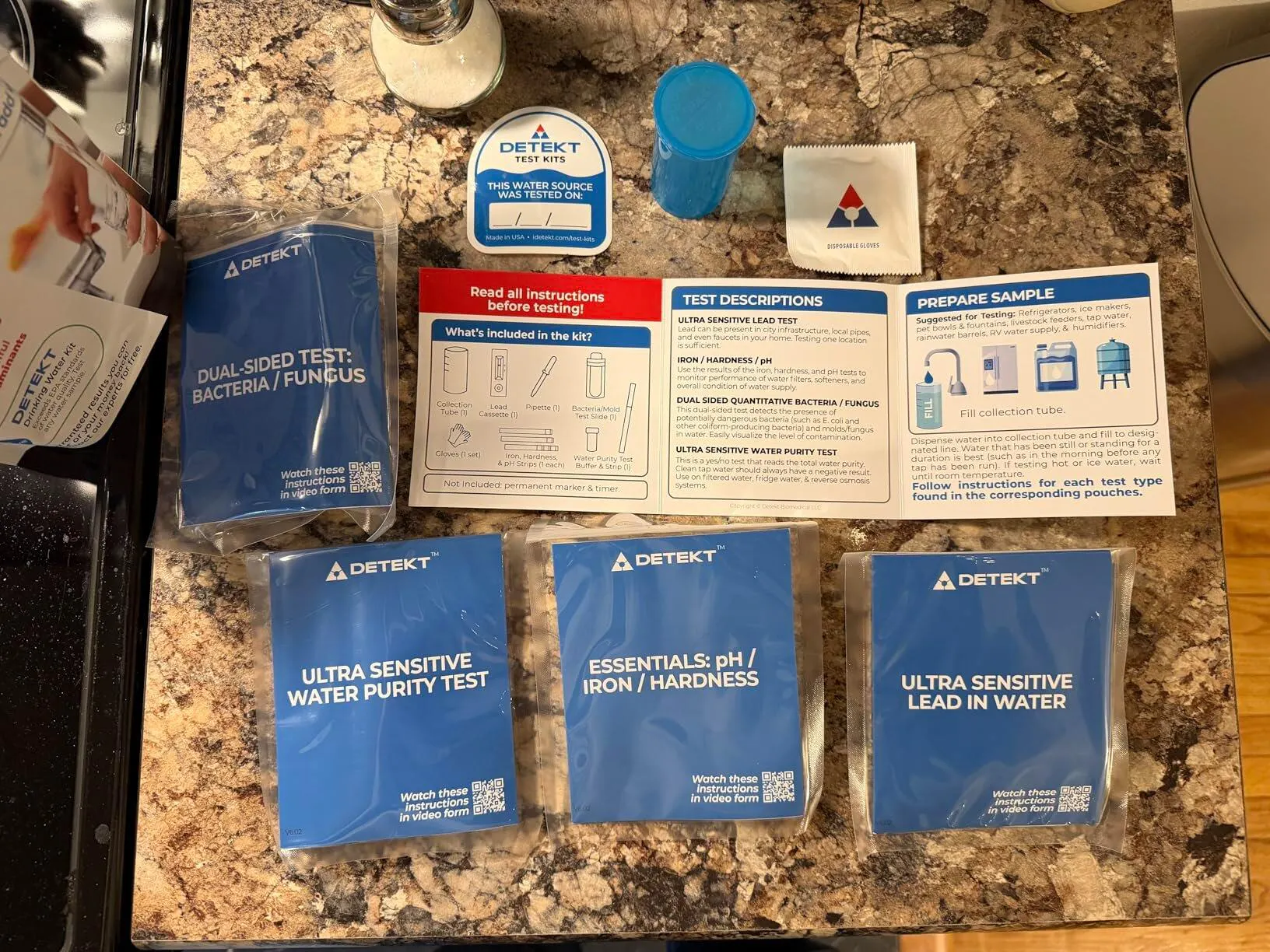
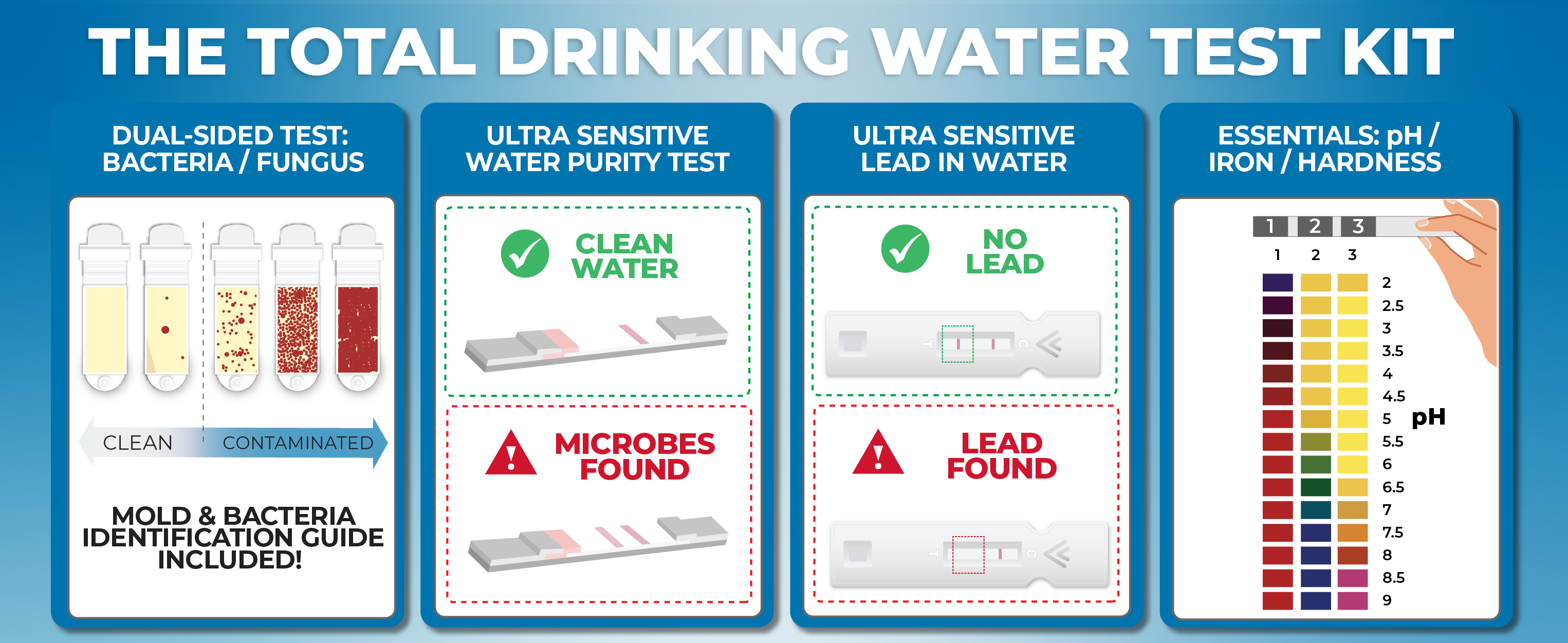
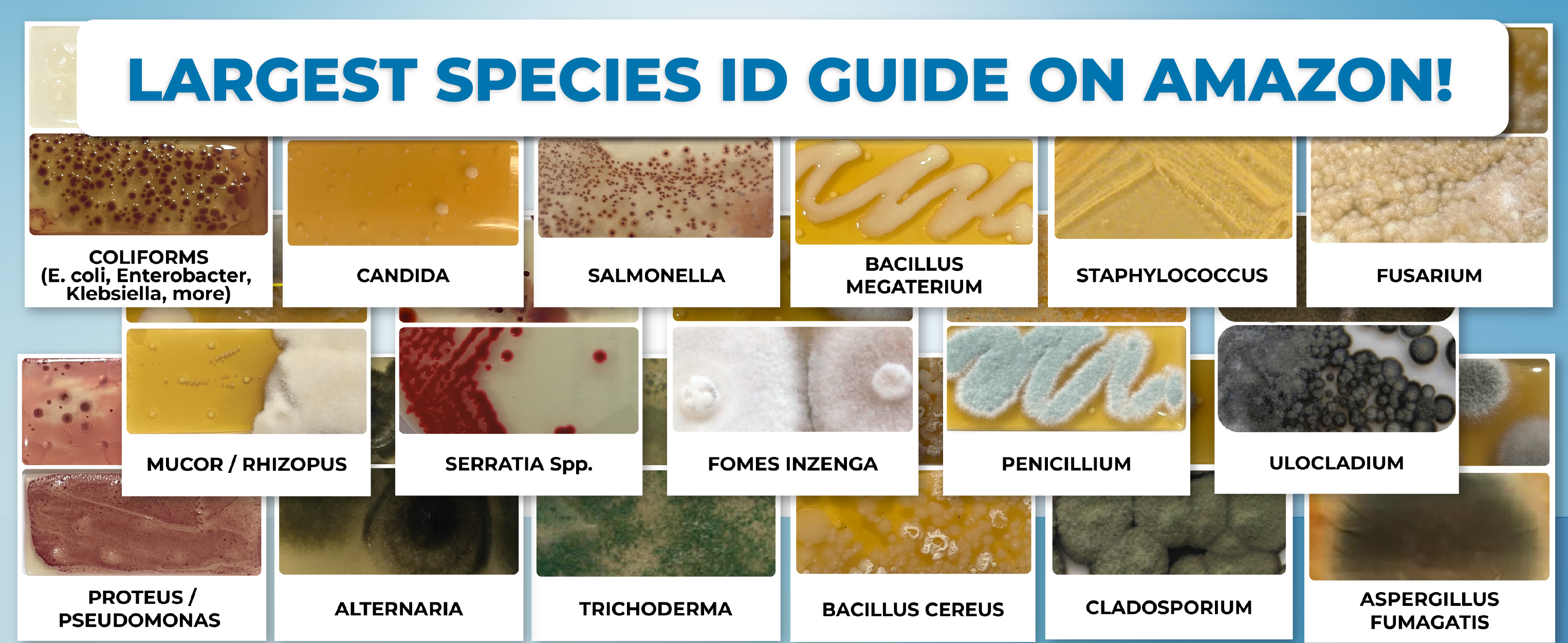
With this kit, you can check your drinking water for a wide range of common contaminants in one convenient package. It tests for lead, bacteria, mold, and key water chemistry metrics including pH, hardness, and iron. Whether you're using municipal tap water or a private well, this kit gives you a comprehensive snapshot of water safety within minutes.
How does it work?
How does it work?
Start by collecting a sample directly from the tap. Use the included test strips and reagents to screen for chemical and microbial indicators—after a brief reaction period, you’ll see easy-to-read color changes that correspond to contamination levels. Each parameter is separate and clear, so you can quickly identify potential issues and understand which require further attention.
More about water testing
More about water testing
>> Check out our knowledge hub with dozens of articles on water testing!
Keeping your household water clean and safe doesn't have to be complicated or expensive. This Made-in-USA Water Test Kit by Detekt puts lab-grade screening tools into your hands, so you gain peace of mind without needing professional services. It’s perfect for homeowners, renters, or anyone who wants immediate insight into their water’s quality—highlighting risks before they become concerns. The ultra-sensitive detection ensures you can catch issues early and take action, whether it’s adjusting filtration, contacting your water provider, or consulting a certified lab.
Built on over 20 years of expertise in professional testing, used by the EPA, WHO, FDA, and USDA, our kit transforms industrial-grade science into a simple, family-friendly tool.
- Lab-Grade Accuracy at Home: Proven technology trusted in industrial and regulatory standard.
- Peace of Mind in Minutes: Easy step-by-step use with clear, visual results.
- Family-First Innovation: Developed by a family business committed to protecting homes worldwide.
Total Drinking Water Test Kit is a lab-grade DIY water quality test for tap and well water that screens for lead, bacteria, mold, pH, and hardness at home, with results in minutes. Made in the USA, it gives you a fast first look at common drinking water concerns without sending samples to a lab.
- Tests 5 key water quality indicators: lead, bacteria, mold, pH, and hardness
- Works for both tap water and private well water
- Lab-grade DIY format for at-home screening in minutes
- Made in USA for a clear, traceable product origin
- Useful for homes, apartments, rentals, cabins, and RVs
Compared to single-issue strips that only check hardness or pH, this kit covers multiple common drinking water concerns in one at-home test. It is especially helpful after moving into a new home, noticing a metallic taste, dealing with plumbing changes, checking well water after heavy rain, or troubleshooting water issues in kitchens, bathrooms, and vacation properties.
Use it as a practical screening tool before choosing a filter, scheduling professional water treatment, or deciding whether follow-up lab analysis makes sense. Unlike guessing based on taste or odor alone, this kit gives you clear, category-specific results you can use to make better decisions about drinking, cooking, pets, and everyday household water use.


Frequently Asked Questions
What organisms does this test detect?
What organisms does this test detect?
This kit screens for harmful cyanotoxins, including microcystins, that are produced by blue-green algae (cyanobacteria) in lakes, ponds, rivers, or household water sources.
Do I need special equipment? Or lab testing?
Do I need special equipment? Or lab testing?
No, everything you need is included in the kit. No lab required.
How accurate are the results?
How accurate are the results?
The test is designed for sensitive on-site detection, giving you a reliable early warning when cyanotoxins are present. It is a screening test that detects as little as 4ppb of cyanotoxin.
How fast are results?
How fast are results?
The test takes about 10 minutes to complete.
What if I get a positive result?
What if I get a positive result?
Do not drink, swim in, or allow pets or livestock to access the affected water. Report the finding to your local environmental or water authority and use a safe alternative water source until confirmatory testing and remediation can be completed.
What does a drinking water test kit detect?
What does a drinking water test kit detect?
A drinking water test kit detects common contaminants that affect water safety and taste. This kit tests for lead, bacteria, mold, pH levels, water hardness, and iron. These are the most critical indicators of water quality for both tap water and well water sources, giving you a complete picture of your home's water safety.
How do I test my well water for bacteria at home?
How do I test my well water for bacteria at home?
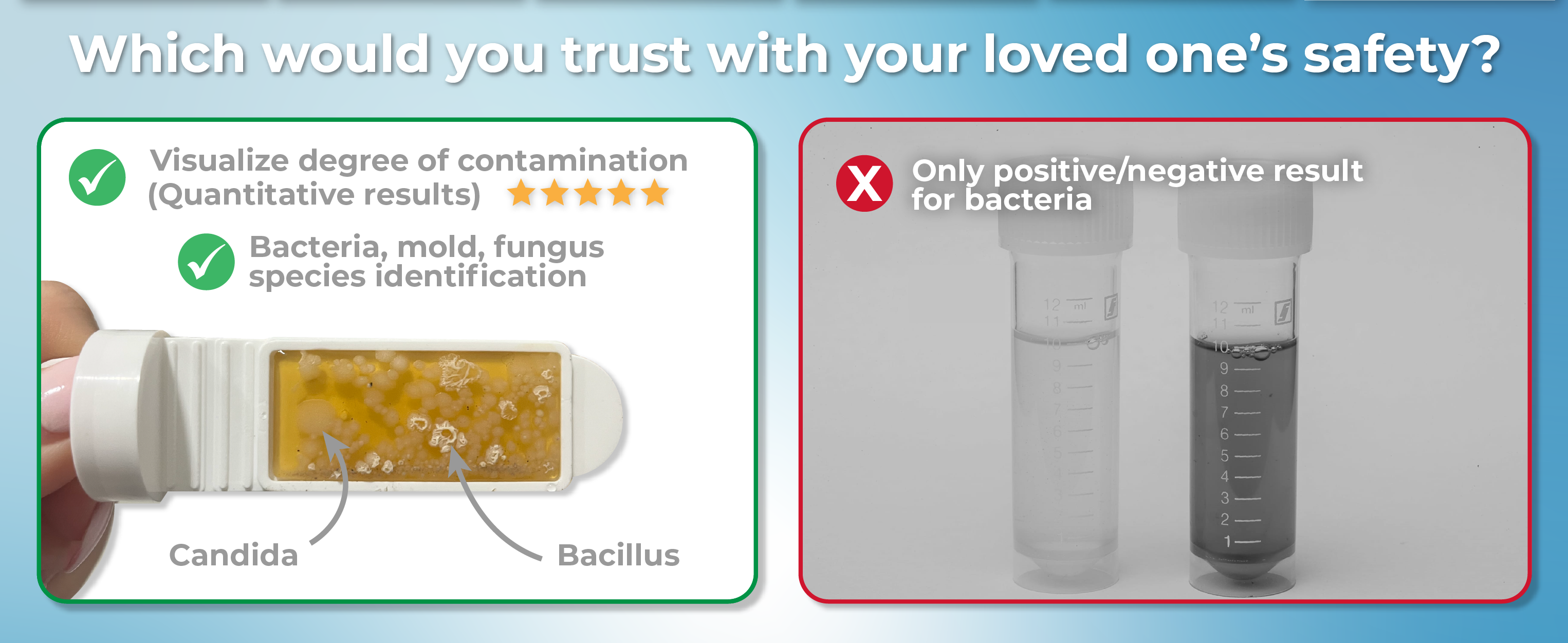
Testing well water for bacteria at home is simple with this kit. Collect a water sample from your well tap, use the included bacteria test strip, and wait 10-15 minutes for results. The color-change indicator shows bacteria presence clearly. Private wells should be tested at least once per year since they aren't monitored by municipal water systems.
Is my tap water safe to drink?
Is my tap water safe to drink?
The only way to know if your tap water is safe is to test it. Municipal water is treated but can pick up contaminants like lead from old pipes between the treatment plant and your faucet. This home water test kit checks for lead, bacteria, mold, and other harmful substances in minutes—giving you clear answers about your tap water safety without waiting for lab results.
Do I need a water test kit if I have city water?
Do I need a water test kit if I have city water?
Yes. City water is treated at the source, but contaminants like lead, bacteria, and mold can enter your water through aging pipes, fixtures, or your home's plumbing. A drinking water test kit lets you check what's actually coming out of your tap—not just what left the treatment plant. It's especially important for homes built before 1986, families with infants, or anyone with a compromised immune system.