


5-Minute Lead Water Test
5-Minute Lead Water Test
Available in stock (24)
Couldn't load pickup availability
What do I test?
What do I test?
With this kit, you can check your drinking water for toxic lead in water and pipes. Whether you're using municipal tap water or a private well, this kit gives you a snapshot of lead water safety within minutes. No amount of lead is safe.
How does it work?
How does it work?
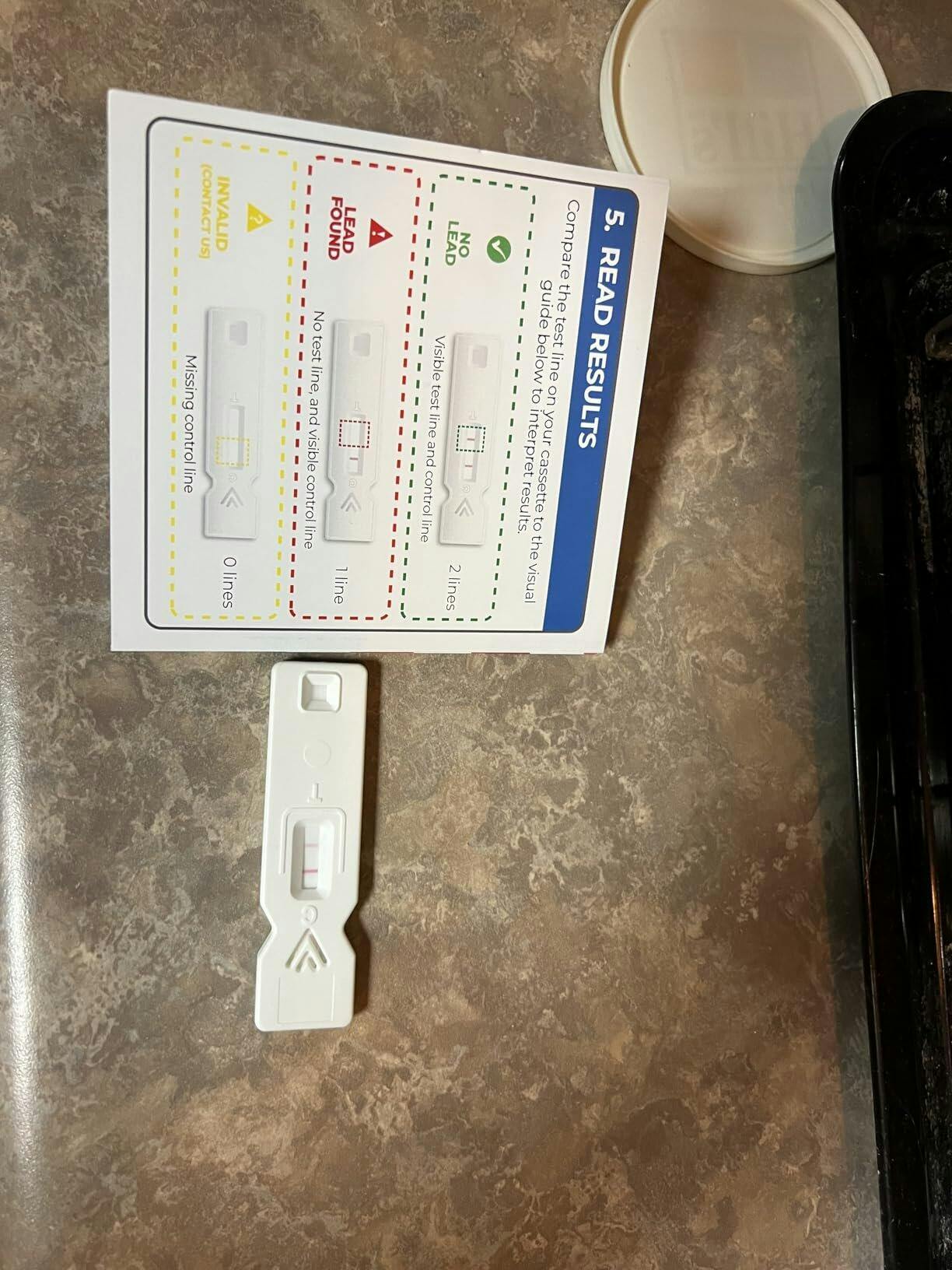
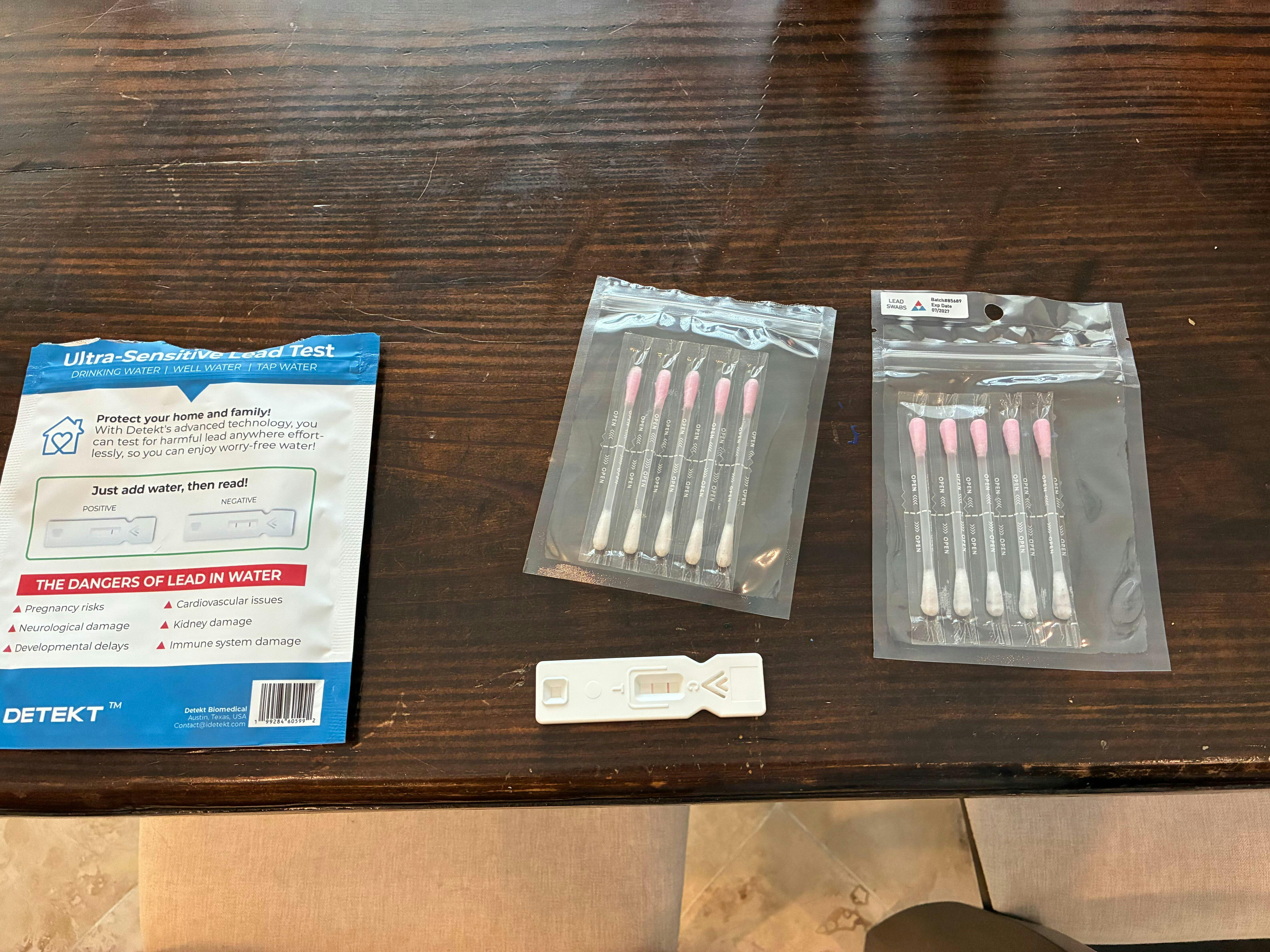
Start by collecting a sample directly from the tap. Use the included ultra-sensitive test strip to screen for lead in water —after 5 minutes, you’ll see easy-to-read color changes that correspond to contamination level.
View Detailed Guides & Instructions Videos
More abut lead testing
More abut lead testing
>> Check out our knowledge hub with dozens of articles on lead testing!
Built on over 20 years of expertise in professional testing, used by the EPA, WHO, FDA, and USDA, our kit transforms industrial-grade science into a simple, family-friendly tool.
- Lab-Grade Accuracy at Home: Proven technology trusted in industrial and regulatory standard.
- Peace of Mind in Minutes: Easy step-by-step use with clear, visual results.
- Family-First Innovation: Developed by a family business committed to protecting homes worldwide.
This lead in water test kit helps you screen tap water for possible contamination at home in just 5 minutes. It uses lab-grade DIY testing for a fast first check on drinking water, kitchen taps, bathroom faucets, filtered water, and older plumbing systems.
- Detects potential lead contamination in household water in 5 minutes
- Lab-grade DIY format for at-home screening without sending samples out first
- Useful for tap water, drinking water, sink faucets, filtered water, and plumbing checks
- Helpful before moving into an older home, after plumbing work, or when checking school and rental water sources
- Simple home test option compared to waiting on a full lab submission for an initial screening step
Unlike basic guesswork or relying on water taste, this kit gives you a quick, practical way to check for a known heavy metal risk. Compared to sending every sample to a lab first, it offers a convenient screening step you can do right away when water safety is a concern.
Use it when testing water from older pipes, checking a nursery sink, confirming water quality after renovations, or monitoring faucets in apartments and rental properties. If you want a fast answer before deciding on filtration, plumbing repairs, or follow-up lab analysis, this kit is an easy place to start. Learn more and test with confidence.

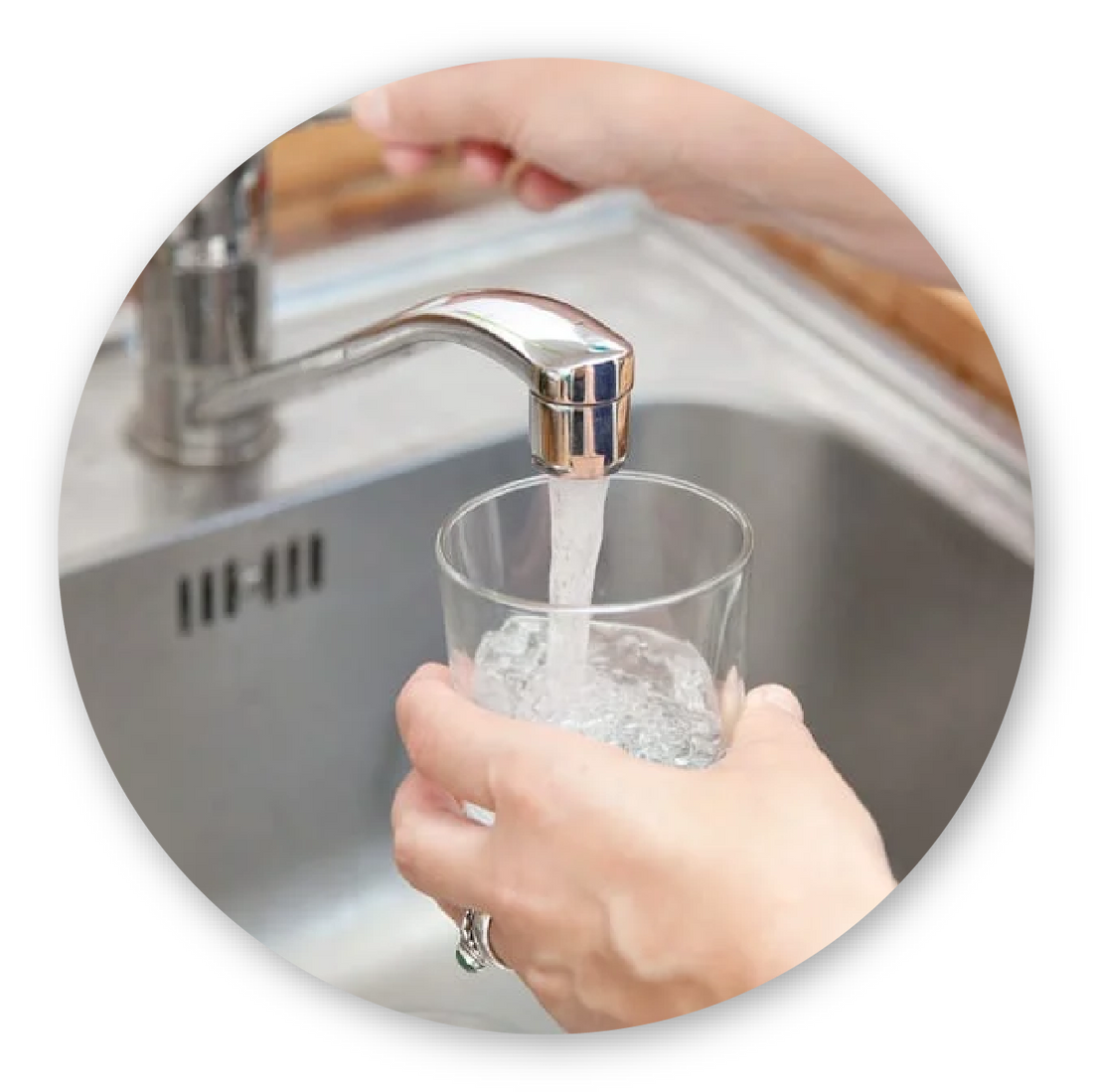
Test lead in water
No lead is safe. Our test detects at the lowest level!

Ultra-sensitive
Meets or exceeds all EPA standards of detection.

Made in the USA
Trusted technology used by industry professionals.

Frequently Asked Questions
What does this test detect?
What does this test detect?
This kit tests for the presence of lead in your drinking water.
Do I need special equipment? Or lab testing?
Do I need special equipment? Or lab testing?
No, everything you need is included in the kit. No lab required.
How fast are results?
How fast are results?
This test shows visible results within 10 minutes.
What if I get a positive result?
What if I get a positive result?
A positive indicates lead in water.
How does a lead water test kit work?
How does a lead water test kit work?
A lead water test kit uses ultra-sensitive test strips that react to lead contamination in your water. Simply collect a sample from your tap, dip the test strip, and wait 5 minutes. The strip changes color to indicate lead levels—making it easy to detect dangerous contamination without sending samples to a lab or waiting weeks for results.
Can I test my tap water for lead at home?
Can I test my tap water for lead at home?
Yes! You can easily test tap water for lead at home using a DIY lead test kit. Detekt's lead water test detects contamination in just 5 minutes with lab-grade accuracy. It works on municipal tap water, well water, and filtered water—no professional equipment or lab fees required. Perfect for homeowners, renters, and families who want fast, reliable answers.
Is lead in drinking water dangerous for my family?
Is lead in drinking water dangerous for my family?
Yes—the EPA confirms no amount of lead in drinking water is safe. Lead exposure is especially harmful to children (affecting brain development), pregnant women, and infants. Homes built before 1986 often have lead pipes or lead solder that can contaminate water. Testing your drinking water for lead is the only way to know if your family is at risk and take action to protect them.
Should I test my home's water for lead if I have old pipes?
Should I test my home's water for lead if I have old pipes?
Absolutely. If your home was built before 1986, there's a high chance your plumbing contains lead pipes, lead solder, or brass fixtures that can leach lead into your drinking water. Even newer homes can have lead contamination from old municipal water lines. A quick lead water test gives you peace of mind—or alerts you to take protective action for your family.